The Yoga Path • Omaha, NE

Icon

{ Practicing Physical, Mental & Spiritual Health }

Home Practice Level I,4

We’re on to the fourth and final sequence of the First level. If you’ve be following this level you will of course see that the poses are very simple and basic. Yet these are the building blocks for moving into the more difficult and longer sequences. While the practice is simple and can be done in about 20 minutes, if you repeat the poses where instructed you may find that you can go very deep into each pose.

Sukhāsana/simple sit: Sit with spine straight and elevated. Sit on blankets to elevate if knees are higher than hips. 2x changing the cross of the legs.
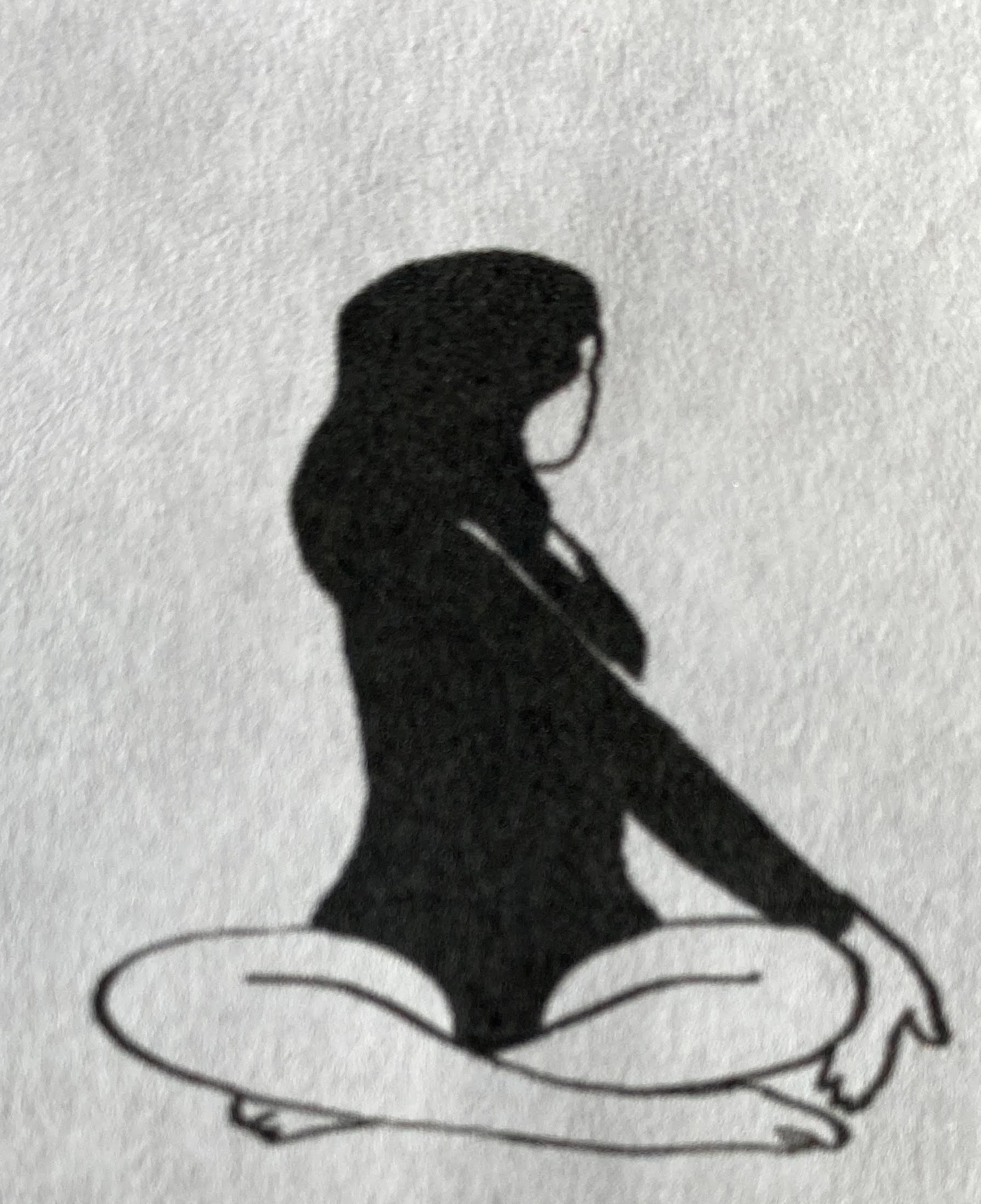
Sukhāsana Twist: Maintain the extended , straight spine and twist to the side from the waist first. Do both sides then change the cross of the legs. 2x

You’ll notice in this practice twists are being introduced. This involves utilizing the core. So with this first twist draw the core in the direction your body turns so as to awaken the belly. Than draw the core actively into all the poses that follow. Move the core-strength out into the extended limb(s).

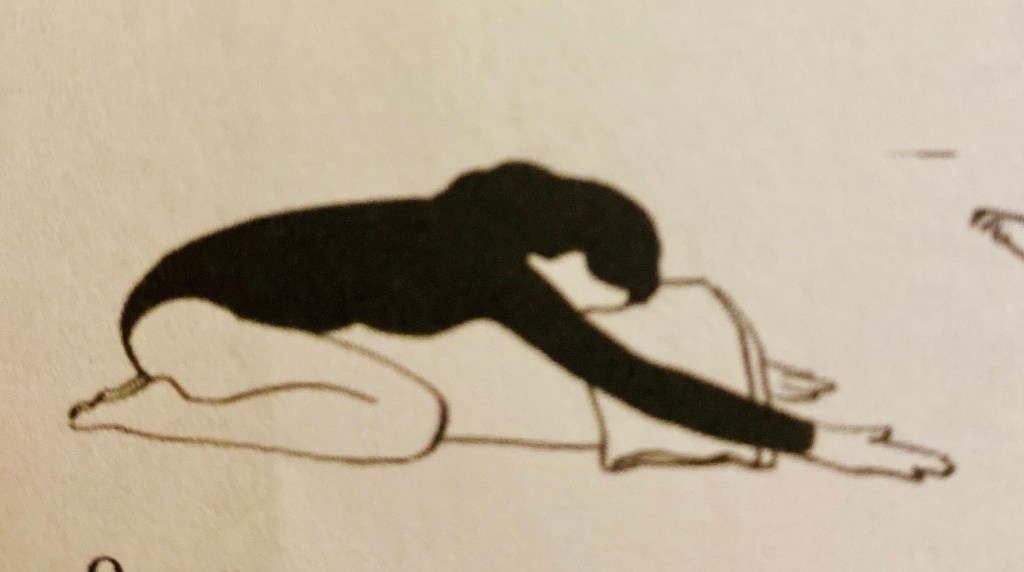
Adho Mukha Vīrāsna/downward-facing hero: Spread the knees apart, extend arms forward, lift elbows, press the palms of the hand down. Try to drop the head down, widen through the shoulders. Hold for about 2 minutes following the breath.

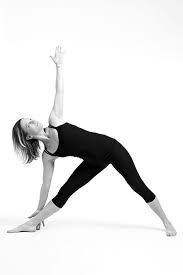
Trikonasna/triangle pose: Use a block or prop as need be, but repeat 2x each side and see if you can get lower on second attempt. Keep both legs very strong.
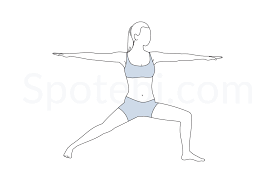
Virabhadrasana 2: Repeat 2x each side and see if you can get lower on second attempt. Keep both legs very strong.

Ardha Candrāsana/half-moon pose: Come up on down into this pose from trikonāsana/triangle with the back leg very straight and strong. Extend out through the lifted heal. Prop the bottom arm up with a block or a chair as needed. 2x

Adho Mukha Svanasana / downward -facing dog pose: Repeat 2x moving into the planks pose between. Notice your breath while doing. It should be strenuous enough to make you breath hard.

Bharadvājāsana in chair: Again get the spine straight and extended. Feet a directly under the knee with the mid-thigh pressed into the chair back. Start at the waist spiraling the twist up the torso. 2x each side.

Savasāna/corpse pose: Hold 5 minutes with a long folded blanket over the belly. (not pictured) Remember this is a pose too, so come out of it slowly and intentionally as you’ve learned.

We shall not cease from exploration
And at the end of all our exploring
Will be to arrive where we started
And know the place for the first time.

T.S.Eliot

Filed under: Education, Home Practice, Virtual Yoga, , ,

Bookmarks

At the Yoga Path there are bookmarks on the ledge by the gnarly Christmas cactus. They were created when first opening the school as a marketing tool. Something to hand out to prospective clients and at health fairs. I hand them out when someone new wants a business card and often include them in business letters sent out. They are often overlooked by the regular students who come and go, while I forget about them too, except when dusting around them at the front end of the studio.

The title at the top of the bookmark is HOW TO PRACTICE YOGA WITHOUT EVEN BENDING. At the time of their inception, I think I was trying to be clever, but actually the teaching on them is quite ancient. The list of four things to practice is:

  1. Friendliness toward the Joyful
  2. Compassion for those who are Suffering
  3. Celebrating the Good in others
  4. Having Equanimity to the Faults and Imperfections of other

These are referred to in Yoga as the Brahmaviharas (Four Immeasurable Minds)*. In Sanskrit they are
1. Maitri (metta in Pali)
2. Karuna (compassion)
3. Mudita (joy)
4. Upeksha (equanimity)

These aren’t just concepts, but responses to everyday life situations.
Maitri is often called loving-kindness, but another translation is friendliness and generosity. Do you ever find yourself in a situation where someone is happy or joyful, but find yourself being resentful or jealous?
Or perhaps someone is suffering, but you don’t feel compassion, but a sense of satisfaction they are getting what they deserve?
How often do we notice someone doing something good or kind, but we feel sense of suspicion or contempt? Or perhaps we don’t even recognize the good in others, or even a beautiful flower or sunrise, because of the mood that dominates our thoughts?
And this loss of equanimity toward others, often arises because we see ourselves as apart from and separate from the person in front of us. Upeksha is translated by Thich Nhat Hanh as inclusiveness or interbeing. This separation from people and things around us, is just a mental formation created by our judgements and stories constantly playing in our minds.

Yet yoga in it’s psychology as laid out in the sutras is always very practical. It’s not concerned that we practice the four Brahmaviharas so we can become good, moral people. The teaching in the Patajanjali’s sutras encourages us to practice them because, if we don’t, the mind will turn inward and obstacles will stand in the way of our progress.

These obstacles are succinctly listed as

illness
fatigue
doubt
carelessness
laziness
attachment
delusion
failure to achieve stillness
failure to maintain stillness

Such obstacles make the body restless, the breathing coarse, and the mind agitated. They result in suffering.

So this is what’s on the bookmark at the Path. Sometimes I wonder if the design or the typeface I selected obscures the message on the bookmark. Or maybe it’s just easier and more accessible to practice bending?

*”The four Brahmaviharas are immeasurable, because if you practice them, they will grow in you every day until they embrace whole world. You will become happier and everyone around you will become happier, also.”

Thich Nhat Hanh

Filed under: Education, Virtual Yoga, ,

Deep Relaxation I

There is this practice called Deep Relaxation. Just to be clear this is not specifically a yoga exercise. Though most often when doing it you take the savāsana position or lay on your side. The technique could be compared to yoga nidra, though that term is sort of esoteric and not familiar to most practitioners. It is also not meditation in the strict sense of the word. Where in meditation one tries to stop and focus, deep relaxation is a surrendering to the fatigue and stress in our body. Yet then again it is not a nap, though one might fall asleep while doing it; usually waking up a little later in a soft repose that is often healing and nourishing.

Relaxation is essential for accessing the tranquility and joy that lead to increased personal well-being.

If you are like me, you will approach this exercise with a degree of doubt and skepticism. So be it. I’ve never liked naps because usually they leave me tired and disoriented in the middle of the day. Yet this practice is something altogether different. I often do this after a long bike ride, where I’m physically exhausted. It works wonders. For you, it might be helpful after a day of working from home, looking at a screen for too many hours and feeling scattered or dispersed.

This is your assignment: Lie down in a comfortable position and listen to this guided Relaxation.
This Relaxation audio is offered from Sister True Dedication from the Plum Village tradition. I chose it, because she has pleasant voice and it’s only 15 minutes long. So the time commitment isn’t that much. Try it. You perhaps will find it healing.

When we relax, we become calm water, and we will reflect reality as it is. If we’re not calm, the image we reflect will be distorted. When the image is distorted by our minds, it’s not the reality, and it causes lots of suffering.”

Thich Nhat Hanh

Filed under: Education, Virtual Yoga, , , ,

Home Practice Level 1,3

This practice sequence is very short, but intense (rajasic). The feel is very energetic while helping with focus. If you feeling sort of anxious or antsy, these poses can be very helpful. Yet the poses are basic and you are familiar with them all. I encourage you to go through it once, skipping the last two poses and repeat from the beginning including the last two. Especially if you’re still feeling restless.

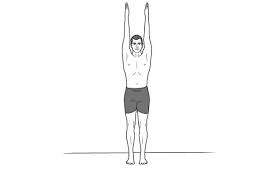
Urdhva Hastasana coming from Tadasana. Palms facing inward with fingers and thumb together. Repeat 2x.

Utkatasana coming from Tadasana. Palms pressing together, keeping knee in line with ankles and hips . Repeat 3x going lower each time.

Trikonasna/triangle pose: Use a block or prop as need be, but repeat 2x each side and see if you can get lower on second attempt. Keep both legs very strong.

Utthita Parsakonasana /side-angle pose: Use a block or prop as need be, but repeat 2x each side and see if you can get lower on second attempt. Keep both legs very strong.

Vimanasana bring arms out, turn toward the bent knee, lifting and pivoting the back heel. Lift chest forward and up utilizing arms to help with balance and strength. Repeat 2x on each side.

Vibhradrásana 1 / warrior 1 Plant back heal down and in, turning front of legs out vigorously. Push head of back hip forward and sink hips as low as you can; then lower. Don’t allow forward knee to project ahead of the ankle. Repeat 2 or 3x on each side.

Adho Mukha Svanasana / downward -facing dog pose. Repeat 3x moving into the planks pose between. Notice your breath while doing. It should be strenuous enough to make you breath hard.

Catuspadāsana / bridge holding ankle. Hold the ankles in this pose. If unable to reach, then us a strap or a belt. Hold and breath for about 30+ seconds.
Repeat 2x releasing slowing and mindfully. .

Adho Mukha Virasana with support. Try to find a cushion or blankets to get the head the same height at the hips. Legs are apart, arms are forward. Breath and hold.

Savasāna/corpse pose. Yes finally you get to do savasāna! Remember this is a pose too, so come out of it slowly and intentionally as you’ve learned.

“Yoga is the method by which the mind is calmed. And the energy directed to constructive channels.”

BKS Iyengar

Filed under: Education, Home Practice, Virtual Yoga, , , ,

Enter your email address to subscribe to The Yoga Path Blog and receive notifications of new posts by email.

Join 676 other subscribers
Visit our Site