The Yoga Path • Omaha, NE

Icon

{ Practicing Physical, Mental & Spiritual Health }

Fifty-one Mental Formations

Mental Formations

Currently in class we’ve been studying the Four Establishment of Mindfulness as taught by Buddha in the Satipatthana Sutta. We’ve come to the third establishment, which is observing “the mind in the mind”. In our readings and discussion we’ve run across reference to the 51 mental formations. This list of 51 is from the  Abhidharma teaching in the Pali Canon. Thich Nhat Hanh talks about these often when referring to manifestations of the mind or “mental formations”, but he seldom lists them. Jokingly he tells how as a novice he was made to memorize them, but in teaching he doesn’t go into detail about them.

However,  western students seem drawn to know what the list of 51 is. I guess we’re always looking for 12 steps or 7 effective habits to help us itemize and plan the changes in our lives. So as requested by many student of the Yoga Path and all other curious oblates here is the list of 51 mental formations.  It would be worthwhile to hear what insights come of reading and absorbing this list. Please comment.

5 Universals
contact
attention
feeling
perception
volition

5 Particulars
intention
determination
mindfulness
concentration
insight

11 Wholesome
faith
inner shame
shame before others
absence of craving
absence of hatred
absence of ignorance
diligence, energy
tranquility, ease
vigilance, energy
equanimity
non-harming

6 Primary Unwholesome
craving, covetousness
hatred
ignorance/confusion
Arrogance
doubt, suspicion
wrong view

20 Secondary Unwholesome
10 Minor Secondary Unwholesome
anger
resentment, enmity
concealment
maliciousness
jealousy
selfishness, parsimony
deceitful, fraud
guile
desire to harm
pride

2 Middle Secondary unwholesome
lack of inner shame
lack of shame before others

8 Greater Secondary Unwholesome
restlessness
drowsiness
lack of faith, unbelief
laziness
negligence
forgetfulness
distraction
lack of discernment

4 Indeterminate
regret, repentance
sleepiness
initial thought
sustained thought

10 Wholesome
(added by Thich Nhat Hanh)
non-fear
absence of anxiety
stability, solidity
loving kindness
compassion
joy
humility
happiness
feverlessness
freedom/sovereignty

3 Unwholesome
(added by Thich Nhat Hanh)
fear
anxiety
despair

Filed under: Education

Meditating Zombie

Meditating Zombie

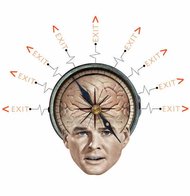
One of the things that happens when practicing yoga is we calm the mind. I know that if I give myself to the practice, whether it be the poses or breathing or meditation, what starts to happen is that I can slow down enough that I can then stop thinking. Or at least thinking so much. But the operative phrase there is “stop thinking” . For many of us, this “stopping”  is the sticking point. The thought of not thinking How could we do such a thing? Many of us, myself included, have the notion that if we stop thinking, we would, by default, be thoughtless. Or to put it another way, stupid! We’d be unthinking louts walking around without discrimination or judgement. This thought is almost unconscious. Yet our intellect, our memories, our judgments is even more important to us then our faces and the bodies that carry them around. So if we stop thinking, we’d be nothing but some ambling zombie void of personality. So in the back of our meditating minds, being a successful meditator is equivalent to joining the cast of extras in Night of the Living Dead.
And this belief undercuts many of our best efforts to slow the mind down. Or even noticing the quality of our mind in the present moment. Yet sometimes this thinking isn’t all that lofty. Sometime it’s obsessing, worrying, remembering how your brother bullied you 25 years ago, reviewing a grocery list for the 17th time, wishing you had said what you really meant to say last week in that meeting, regretting your past, longing for a better future, wanting a different color car; the list goes on. The thinking mind is often like cable TV with 175 channels and nothing to watch. Wouldn’t it be nice at times to turn it off and rest?
I ran across this statement In Thich Nhat Hanh book: Breathe, You Are Alive!, ask yourself if you believe it? “When we think to much, the quality of our being is reduced. If we can stop thinking, we increase the quality of our being.”  When you read this, do you buy it? I know my busy, obsessive, thinking mind won’t allow such notion of stop thinking, but then when I practice my yoga, I find it’s true every time.

Filed under: Education

What to Practice while Mark is gone

Home Practice

Intro Yoga Poses

Above is a link to file that lists most asanas that students at the Yoga Path would know. People have asked for a handout for these poses through the years, so in my teaching absence until July 1st, I’ve finally relented and am sharing them with you.

Remember the best way to set out to practice yoga is to only do 15 minutes a day, everyday. Sometimes these 15 minute practices turn into 30 minute or possibility an hour. Sometimes not. Doing your yoga everyday though, will bring a lot of health, joy, and peace! This is certain. So why would you deny yourself something that precious?

Remember the Five Friend of Practice:
Faith\Effort\Awareness\Concentration\Insight

Filed under: Education

Fresh Air Story on Yoga

There was a recent story in the New York Times about the risks of yoga, but this interview of the author William J. Board seems to clear up some of the sensationalism that arose around the Times article. Will Board is a science research writer and life time yoga practitioner who has done his homework on this subject of modern yoga. Also this Fresh Air interviews allows the science researcher to enumerate some of the many benefits derived from the modern practice of yoga. It is worth the listen.

Fresh Air Story

"The Science of Yoga

Filed under: Education

How to invite the bell

At the end of every yoga class, we invite the sound of the bell. As we lie down in Savasana (corpse pose) we practice stillness, the hardest of all poses. Our breath becomes the focus to bring us back to the present moment. Over and over we smile to the wandering mind, but gentlely and persistently return to sensation of our breath.  Then at the end of this pose and the end of our practice, the bell is invited with the intent of

I listen, I listen!
May the sound of the bell call me back
To my true home.

This video explains this practice so beautifully. Please enjoy:

Filed under: Education, The Bell

the Nine Obstacles

Recently in class we have come across the sutra “The 5th obstacle is laziness.” Some students have been asking what & how many obstacles are there?  There are nine:

Illness
Apathy
Doubt
Carelessness
Laziness
Craving
Mistaken view of the world left uncorrected
Failing to reach specific levels
Not being firmly established in effort

Filed under: Education

Readings from the Mat

A brand new Book Club Group is starting at the Yoga Path, to be held on Tuesday Nights 7:30 starting January 24 through February 7  You do not have to be a current student of the Path or practicing yoga. You just need to read a book. The book we be studying is Healing: A Woman’s Journey from Doctor to Nun by Sister Dang Nghiem, a Vietnamese Buddhist nun.

“This extraordinary story takes the reader from Saigon, to the California coast, to a monastery in the southwest France. Huong Huynh was born to a Vietnamese mother and a U.S. soldier in the midst of war. She dedicated her life to healing and transforming the suffering of other people, first as a medical doctor and then as a nun. Ordained by Zen Master Thich Chat Hanh, who gave her the name —Dang Nghiem—(adornment with nondiscrimination), she finally experienced her own healing. With humor, insight, and an irrepressible sense of joy, Sister Dang Nghiem’s story offers clarity and guidance for anyone who has dealt with suffering and loss.

About the Author

Sister Dang Nghiem was born in central Vietnam in 1968 during the Tet Offensive. Her mother was Vietnamese; her father was a U.S. soldier. Raised in Vietnam by her grandmother, she came to the United States in 1985, earned two college degrees, graduated from a prestigious medical school, and began working as a doctor. As a nun, she has integrated Western and Eastern medical traditions and has learned the healing power of mindful awareness and nondiscrimination.”  Parallax Press

We will share for three nights to learn about the transformative teaching of this story.

Cost is $30 which includes the book. To register email info@omahayogapath.net or call 402-905-2295. Space is limited so reserve your place. Share this flyer with a friend.

Filed under: Education

November Yoga Path News

Enclosed is the first monthly Yoga Path news. The bottom left button will allow you to expand to a readable size. Let us know what you think.

Filed under: Education

Suzanne’s Pranayama Class

During the Late Summer Intensive in August, we had guest teacher, Suzanne Swang, teach a pranayama class on yogic breathing. For all those who attended (as well as  for those who didn’t) below is an outline of what she had us do in class. Practice of just a few minutes of one or two of these exercises would be very beneficial. Enjoy:

Thanks again for the opportunity to teach at your beautiful center.  It is such a peaceful space & l love seeing you all!

 Here is the outline of the pranayamas that I taught:

Standing Breath of Joy– conducting the orchestra (with or without the jump)

Agni Sara – pulling the stomach inwards and upwards (with or without the stomach pumping)

Sun Breaths – sweeping the arms out to the sides and up overhead (with or without the toe raise)

Ujjayi & Dirga – ocean sounding breath and 3-part breath

Kapalabati – breath of fire (stomach pumping)

Counting the breath with the metronome

Nadi Shodahana – alternate nostril breathing

Have a great class today – wish I could come, 

Joyfully, Suzanne

Filed under: Education

from the NY Times

When the Mind Wanders, Happiness Also Strays

By JOHN TIERNEY
Published: November 15, 2010 

A quick experiment. Before proceeding to the next paragraph, let your mind wander wherever it wants to go. Close your eyes for a few seconds, starting … now.

And now, welcome back for the hypothesis of our experiment: Wherever your mind went — the South Seas, your job, your lunch, your unpaid bills — that daydreaming is not likely to make you as happy as focusing intensely on the rest of this column will.

I’m not sure I believe this prediction, but I can assure you it is based on an enormous amount of daydreaming cataloged in the current issue of Science. Using an iPhone app called trackyourhappiness, psychologists at Harvard contacted people around the world at random intervals to ask how they were feeling, what they were doing and what they were thinking.

The least surprising finding, based on a quarter-million responses from more than 2,200 people, was that the happiest people in the world were the ones in the midst of enjoying sex. Or at least they were enjoying it until the iPhone interrupted.

The researchers are not sure how many of them stopped to pick up the phone and how many waited until afterward to respond. Nor, unfortunately, is there any way to gauge what thoughts — happy, unhappy, murderous — went through their partners’ minds when they tried to resume.

When asked to rate their feelings on a scale of 0 to 100, with 100 being “very good,” the people having sex gave an average rating of 90. That was a good 15 points higher than the next-best activity, exercising, which was followed closely by conversation, listening to music, taking a walk, eating, praying and meditating, cooking, shopping, taking care of one’s children and reading. Near the bottom of the list were personal grooming, commuting and working.

When asked their thoughts, the people in flagrante were models of concentration: only 10 percent of the time did their thoughts stray from their endeavors. But when people were doing anything else, their minds wandered at least 30 percent of the time, and as much as 65 percent of the time (recorded during moments of personal grooming, clearly a less than scintillating enterprise).

On average throughout all the quarter-million responses, minds were wandering 47 percent of the time. That figure surprised the researchers, Matthew Killingsworth and Daniel Gilbert.

“I find it kind of weird now to look down a crowded street and realize that half the people aren’t really there,” Dr. Gilbert says.

You might suppose that if people’s minds wander while they’re having fun, then those stray thoughts are liable to be about something pleasant — and that was indeed the case with those happy campers having sex. But for the other 99.5 percent of the people, there was no correlation between the joy of the activity and the pleasantness of their thoughts.

“Even if you’re doing something that’s really enjoyable,” Mr. Killingsworth says, “that doesn’t seem to protect against negative thoughts. The rate of mind-wandering is lower for more enjoyable activities, but when people wander they are just as likely to wander toward negative thoughts.”

Whatever people were doing, whether it was having sex or reading or shopping, they tended to be happier if they focused on the activity instead of thinking about something else. In fact, whether and where their minds wandered was a better predictor of happiness than what they were doing.

“If you ask people to imagine winning the lottery,” Dr. Gilbert says, “they typically talk about the things they would do — ‘I’d go to Italy, I’d buy a boat, I’d lay on the beach’ — and they rarely mention the things they would think. But our data suggest that the location of the body is much less important than the location of the mind, and that the former has surprisingly little influence on the latter. The heart goes where the head takes it, and neither cares much about the whereabouts of the feet.”

Still, even if people are less happy when their minds wander, which causes which? Could the mind-wandering be a consequence rather than a cause of unhappiness?

To investigate cause and effect, the Harvard psychologists compared each person’s moods and thoughts as the day went on. They found that if someone’s mind wandered at, say, 10 in the morning, then at 10:15 that person was likely to be less happy than at 10 , perhaps because of those stray thoughts. But if people were in a bad mood at 10, they weren’t more likely to be worrying or daydreaming at 10:15.

“We see evidence for mind-wandering causing unhappiness, but no evidence for unhappiness causing mind-wandering,” Mr. Killingsworth says.

This result may disappoint daydreamers, but it’s in keeping with the religious and philosophical admonitions to “Be Here Now,” as the yogi Ram Dass titled his 1971 book. The phrase later became the title of a George Harrison song warning that “a mind that likes to wander ’round the corner is an unwise mind.”

What psychologists call “flow” — immersing your mind fully in activity — has long been advocated by nonpsychologists. “Life is not long,” Samuel Johnson said, “and too much of it must not pass in idle deliberation how it shall be spent.” Henry Ford was more blunt: “Idleness warps the mind.” The iPhone results jibe nicely with one of the favorite sayings of William F. Buckley Jr.: “Industry is the enemy of melancholy.”

Alternatively, you could interpret the iPhone data as support for the philosophical dictum of Bobby McFerrin: “Don’t worry, be happy.” The unhappiness produced by mind-wandering was largely a result of the episodes involving “unpleasant” topics. Such stray thoughts made people more miserable than commuting or working or any other activity.

But the people having stray thoughts on “neutral” topics ranked only a little below the overall average in happiness. And the ones daydreaming about “pleasant” topics were actually a bit above the average, although not quite as happy as the people whose minds were not wandering.

There are times, of course, when unpleasant thoughts are the most useful thoughts. “Happiness in the moment is not the only reason to do something,” says Jonathan Schooler, a psychologist at the University of California, Santa Barbara. His research has shown that mind-wandering can lead people to creative solutions of problems, which could make them happier in the long term.

Over the several months of the iPhone study, though, the more frequent mind-wanderers remained less happy than the rest, and the moral — at least for the short-term — seems to be: you stray, you pay. So if you’ve been able to stay focused to the end of this column, perhaps you’re happier than when you daydreamed at the beginning. If not, you can go back to daydreaming starting…now.

Or you could try focusing on something else that is now, at long last, scientifically guaranteed to improve your mood. Just make sure you turn the phone off.

Filed under: Education

Enter your email address to subscribe to The Yoga Path Blog and receive notifications of new posts by email.

Join 676 other subscribers